 19 May 2026
Many organisations treat supplier security as a simple yes-or-no question. Either the supplier is “secure” or it is not. In reality, supplier vetting sits on a spectrum. Some parts are straightforward. Others require technical judgement, experience and sometimes independent advice. Sadly most organisations don’t know how to vet their suppliers.
The easiest situation occurs when a supplier already holds credible third-party certifications or audit reports. Certifications such as ISO 27001 or SOC 2 do not guarantee perfect security. But they make life much easier. They mean an independent auditor has already examined important areas such as access controls, authentication, change management, logging, backups and incident response processes.
Without that external verification, the burden shifts back to you.
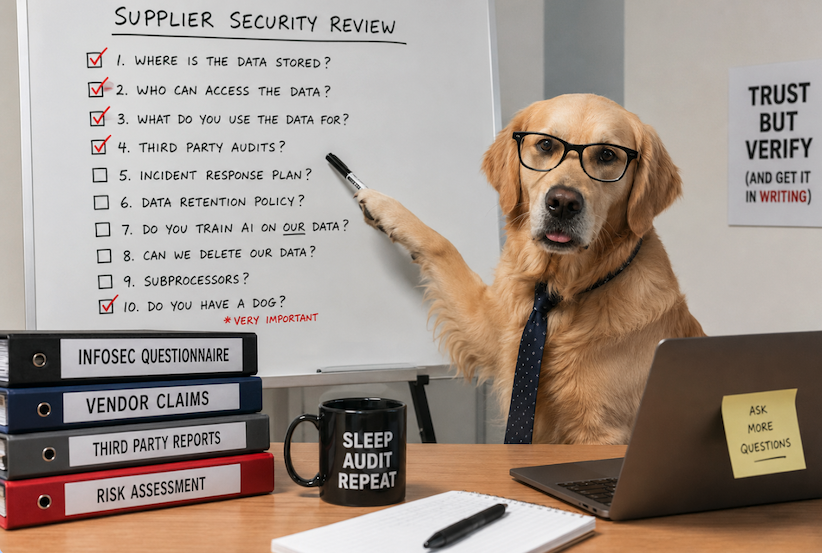
At that point, to achieve due diligence organisations need to start asking practical questions themselves. Where does the supplier store the data? Who can access it? Does the supplier use subcontractors? Does information leave Australia? Does the supplier use customer data for analytics, AI training or product development? What happens when a customer deletes data? How quickly do staff lose access when they leave the company?
The most detailed approach involves bringing in somebody with appropriate technical and governance experience to speak directly with the supplier. A good reviewer will often uncover important operational realities that never appear in marketing material or glossy compliance documents.
If the risk does not warrant a full review a written questionnaire can suffice. It forces suppliers to make clear claims in writing. That creates accountability and gives organisations something concrete to assess if problems arise.
Interestingly, the way a supplier responds to questions often tells you almost as much as the answers themselves. Mature suppliers usually answer clearly, explain limitations honestly and provide supporting documentation. Less mature suppliers often rely on vague assurances, broad marketing language become uncomfortable when discussions move beyond sales material.
Good supplier vetting does not eliminate risk, but it helps organisations understand what they are trusting, what assumptions they are making and where they may need additional controls or oversight.